
Criminal Court Records in Teller County
A Teller County criminal court record is the official case-level record held by the Colorado Judicial Branch Clerk of Court after a criminal matter is filed in court. The local state courthouse is Teller County Combined Court at 101 West Bennett Avenue in Cripple Creek. The Colorado Judicial Branch Teller court page directs Teller County case questions to tellerclerkgeneral@judicial.state.co.us or 719-689-7360. Sheila Griffin is listed as Teller County Clerk of Court and Jury Commissioner, with the same primary court phone line. The court clerk is separate from the elected Teller County Clerk and Recorder, Stephanie Kees, whose office handles recording, marriage licensing, elections, motor vehicles, and county records.
Colorado's criminal court structure matters because not every accusation starts at the same level. Felony criminal matters are district court cases once filed or bound over. Misdemeanors, traffic infractions, felony complaints that may later move to district court, protection orders, and small claims are county court matters. Woodland Park Municipal Court and Cripple Creek Municipal Court handle city ordinance, municipal traffic, and local criminal violations. Woodland Park states that DUI-related offenses, driver's licenses, registrations, and license plates are handled by Teller County Combined Court, and Cripple Creek warns that its police department also writes some citations into Teller County Combined Courts. The right record search begins by identifying which court opened the case.
The 4th Judicial District Attorney's Office serves El Paso and Teller counties and prosecutes state criminal cases. The official DA page names Michael J. Allen as District Attorney and lists a Teller County office at 112 N. A St., P.O. Box 958, Cripple Creek, CO 80813, phone 719-520-7168. The Colorado State Public Defender Colorado Springs office serves Teller County from 30 E Pikes Peak Ave, Suite 200, Colorado Springs, CO 80903, phone 719-475-1235. The prosecutor, defense counsel, and court clerk each have different records; the court file is the neutral case record.
The 4th Judicial District Attorney website identifies the prosecution office serving Teller County criminal cases.
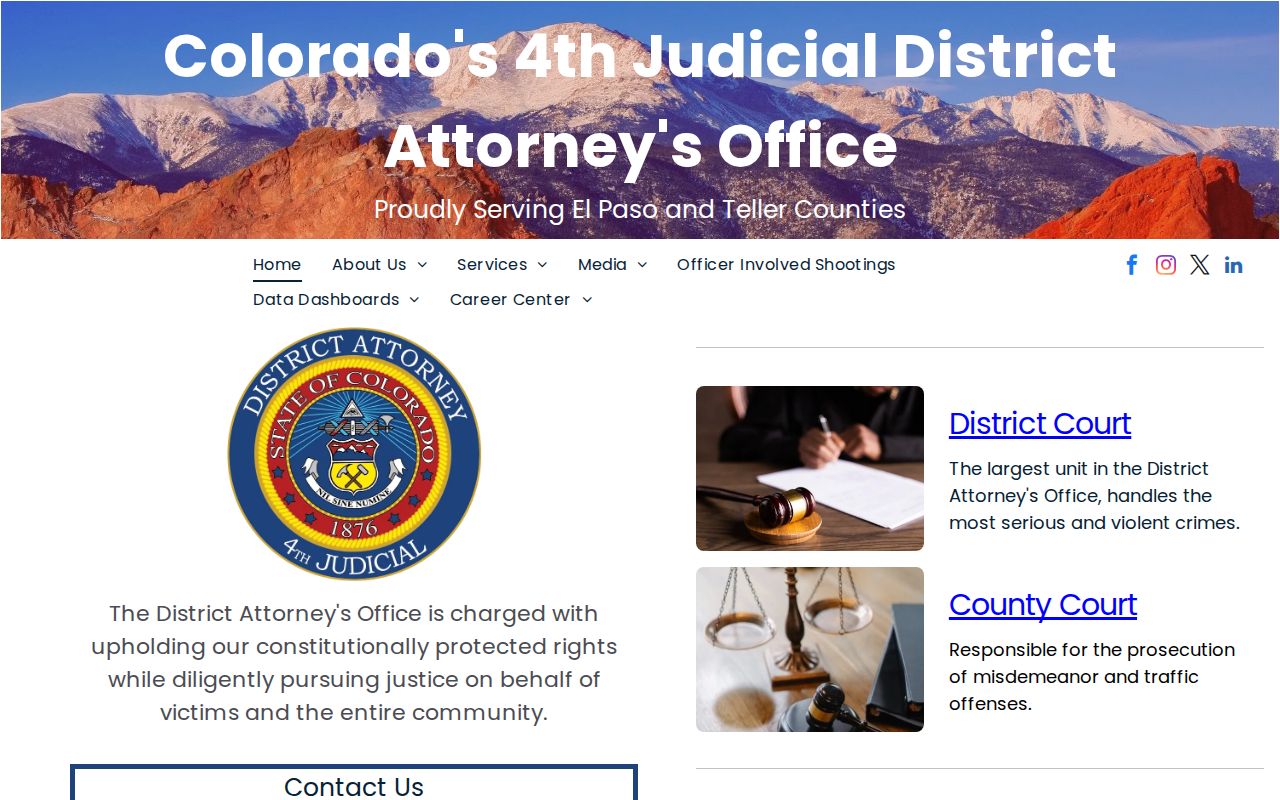
That office is important for understanding who files charges, but the official court record remains with Teller County Combined Court and the Colorado Judicial Branch.
How to Search Teller County Criminal Court Records
The main free starting point is the Colorado Judicial Branch docket search. It is not a full case-document download system, but it helps locate public docket settings and case identifiers. Teller users should select the 4th Judicial District, Teller County, Teller County Courthouse, and the appropriate court type when known. The docket page requires at least one filter in addition to date. A name-only search may miss records if the spelling, hyphenation, or case court is wrong, so use a case number, case year, case class, sequence number, party name, or attorney information when available.
- Open the Colorado Judicial Branch docket search and choose Teller County or the 4th Judicial District.
- Select County Court for misdemeanors or District Court for felony, probation, and bound-over matters when that level is known.
- Add at least one filter beyond the date range, such as case year, case class, party last name, business name, attorney name, or attorney bar number.
- Review the docket events for hearings, warrants, bond settings, pleas, motions, sentencing entries, and closure information.
- Use the Colorado Judicial Branch record/document request form or contact the Teller Clerk of Court when a docket result does not provide the document or certified copy needed.
For copies, older files, restricted records, or records that are not visible online, use the Colorado Judicial Branch record/document request form. Include the case number if known, defendant name, approximate year, court location, document type, and delivery preference. The court may ask for proof of identity, party status, attorney status, or a court order before releasing restricted material. County government CORA requests through Teller NextRequest are useful for county administrative records, but court case files are Judicial Branch records, not ordinary Clerk and Recorder or Board of County Commissioners files.
The Colorado sealed-case search is a separate tool. It is only for defendants checking whether some automatic conviction sealing occurred under C.R.S. 13-3-117. It does not confirm every petition-based sealing, every non-conviction sealing, or whether a third-party private database has removed an item. Criminal history outside the court file can also exist with law enforcement, the sheriff, the jail, the DA, the Colorado Bureau of Investigation, the Colorado Department of Corrections, or federal agencies.
The Colorado Judicial Branch sealed-case page is a narrow defendant-only resource for automatic conviction sealing checks.
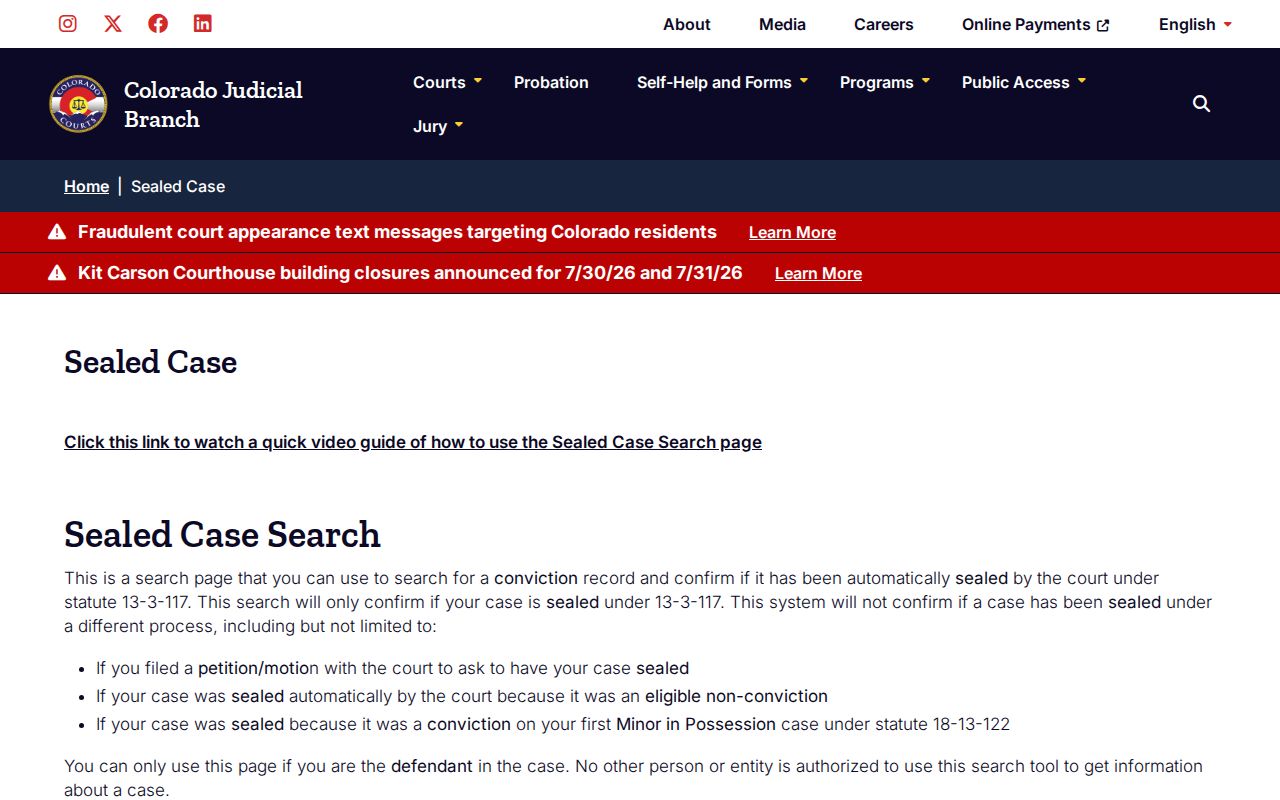
Use it as a sealing confirmation path, not as a general Teller County criminal case search or a replacement for the clerk's court record request channel.
Stages of a Criminal Case
A criminal record changes as the case moves. Early entries may show advisement, bond, probable-cause review, or a complaint. Later entries may show arraignment, motions, plea negotiations, amended charges, trial settings, disposition, sentence, restitution, probation, or a mittimus. In Teller County, a felony complaint may start in county court and move to district court if bound over or directly filed at the district level. Municipal violations stay with Woodland Park or Cripple Creek Municipal Court unless the ticket or charge belongs in Teller County Combined Court.
Case flow: Charges Filed › Arraignment › Pretrial / Motions › Plea or Trial › Disposition › Sentencing
| Stage | What Happens |
|---|---|
| Charges Filed | The DA files a complaint, information, or other charging document. The docket begins to track the filed charge rather than only the arrest or booking reason. |
| Arraignment | The defendant is advised of the charge and enters a plea or receives a future setting. The record may show bond conditions and counsel status. |
| Pretrial / Motions | The parties file motions, exchange discovery, ask for continuances, negotiate pleas, or challenge evidence. Some documents may be restricted. |
| Plea or Trial | The case is resolved by guilty plea, deferred agreement, dismissal, acquittal, or verdict after trial. The result controls whether there is a conviction. |
| Sentencing | The judge imposes jail, prison, probation, fines, costs, restitution, community service, treatment, or other conditions where applicable. |
What a Teller County Criminal Court Record Shows
Public docket data and requested documents can show different levels of detail. The docket search exposes the search structure: judicial district, county, courthouse, court type, division, date range, case year, case class, case sequence, party name, business name, attorney name, and attorney bar number. Full criminal files can include the charging document, docket entries, hearing notices, motions, responses, bond orders, plea paperwork, disposition, sentence, restitution, probation conditions, warrants, mittimus documents, and payments where those items are public under Colorado Judicial Branch policy.
| Field | What It Shows |
|---|---|
| Case Number | Usually combines filing year, case class, and sequence number; the docket search supports these components separately. |
| Court Location | Judicial district, Teller County, Teller County Courthouse, court type, and sometimes division or judicial officer. |
| Defendant | Name of the accused person; public records may redact protected identifiers. |
| Charges | Offense description, statute, class or level when available, and whether a charge was amended, dismissed, or resolved. |
| Plea | Guilty, not guilty, deferred, or other plea status if public and entered in the case record. |
| Disposition | The current or final outcome, including dismissal, conviction, acquittal, deferred judgment, or other court action. |
| Sentence | Jail, prison, probation, fines, costs, restitution, treatment, or other ordered conditions. |
| Bond | Release amount or conditions, surety information where public, and bond-related orders. |
Charges vs. Convictions
A charge is an accusation filed in court. A conviction is a guilty finding or accepted guilty plea. Teller County criminal court records may show charges that were dismissed, reduced, amended, or resolved by deferred judgment. A jail roster may show a primary offense or booking charge before the court file has a final outcome. For the narrower arrest-to-charge pathway, see the court charge records page; for custody status, use the jail roster and inmate channels.
| Charge | Conviction | |
|---|---|---|
| Stage | Filed accusation after arrest, summons, indictment, or direct filing. | Final finding or accepted plea after court process. |
| Proof Level | Probable cause or prosecutorial filing standard. | Beyond a reasonable doubt or a knowing guilty plea. |
| Record Meaning | Does not prove guilt and may later be dismissed or amended. | Can support sentencing, probation, restitution, and future collateral consequences. |
| Where It Appears | Charging document, docket entries, jail booking detail, and court events. | Disposition, judgment, sentencing entry, mittimus, and related orders. |
Reading Dispositions and Sentences
Disposition language should be read charge by charge. One case can include several counts, and each count can end differently. A docket may show that one charge was dismissed, another was reduced, and another produced a guilty plea. Sentencing entries may include jail, prison, supervised probation, unsupervised probation, fines, costs, restitution, community service, treatment, no-contact orders, or other conditions. Probation questions in the 4th Judicial District are routed through a probation officer, firstname.lastname@judicial.state.co.us, 719-452-5900, or 04probation@judicial.state.co.us, according to the Teller court research.
The DA biography and contact page identifies Michael J. Allen and the El Paso/Teller prosecution office contacts.
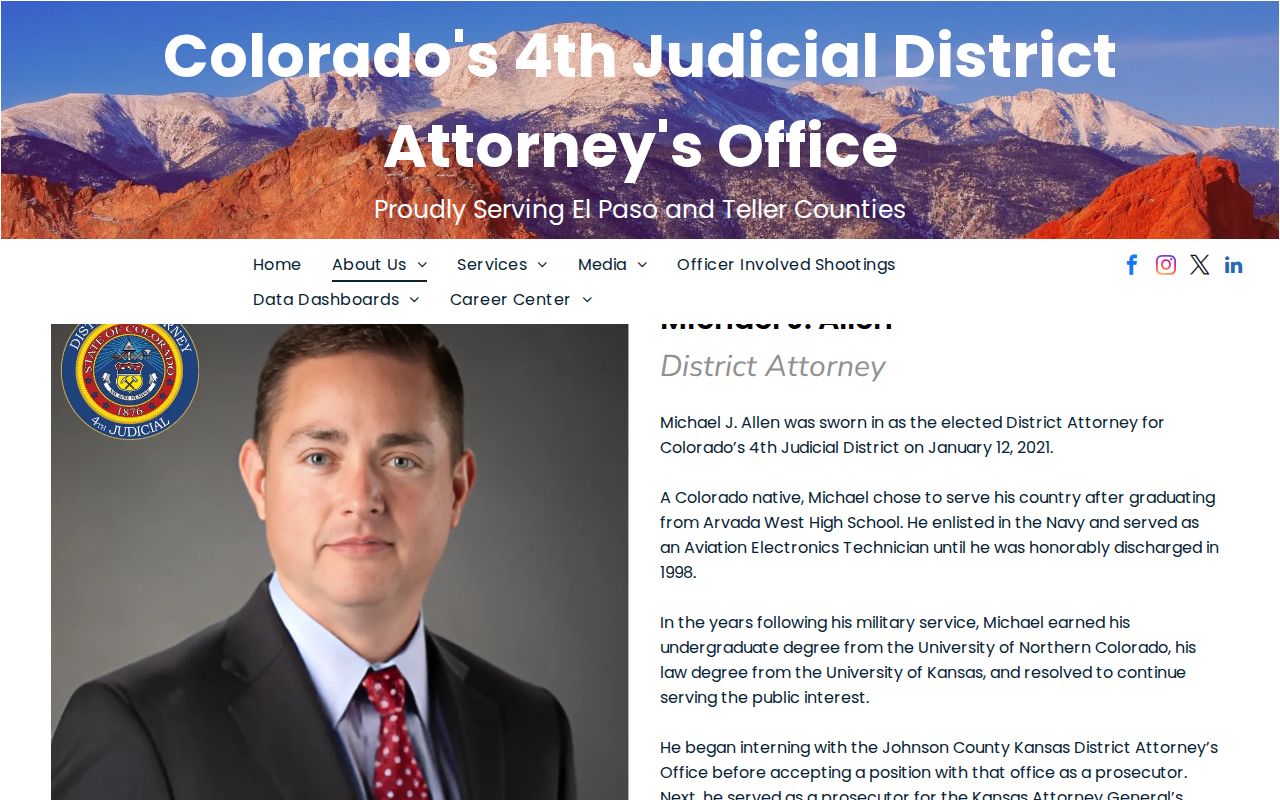
Those prosecution contacts help explain charging authority, while the court docket and clerk record remain the source for final disposition and sentence entries.
Sealed vs. Expunged Records
Colorado describes record sealing as hiding criminal records from public view while the record still exists for authorized users. Law enforcement agencies and certain organizations may still view sealed records. Expungement is mainly tied to juvenile or specific statutory categories and is not the same as routine adult sealing. The Colorado Judicial Branch "Seal My Case" materials direct users to identify the category, use the correct JDF forms, file in the court where the case exists unless instructed otherwise, pay any required fee or request a fee waiver, and serve required agencies or parties if the form packet requires service.
| Sealed | Expunged | |
|---|---|---|
| Visibility | Hidden from ordinary public access after an order or qualifying automatic process. | Removed or treated differently under a specific expungement statute, commonly in juvenile contexts. |
| Record Status | The record still exists and may be available to law enforcement or authorized agencies. | Access and retention depend on the statute and type of proceeding. |
| Teller County Path | Use Colorado Judicial Branch sealing self-help forms and the Teller court that handled the case. | Use the correct juvenile or statutory expungement process where applicable. |
| Public Search Effect | Public docket and document access can be restricted after sealing. | Ordinary public lookup is usually unavailable if expungement applies. |
The Colorado Judicial Branch Seal My Case resource explains sealing categories and form paths.
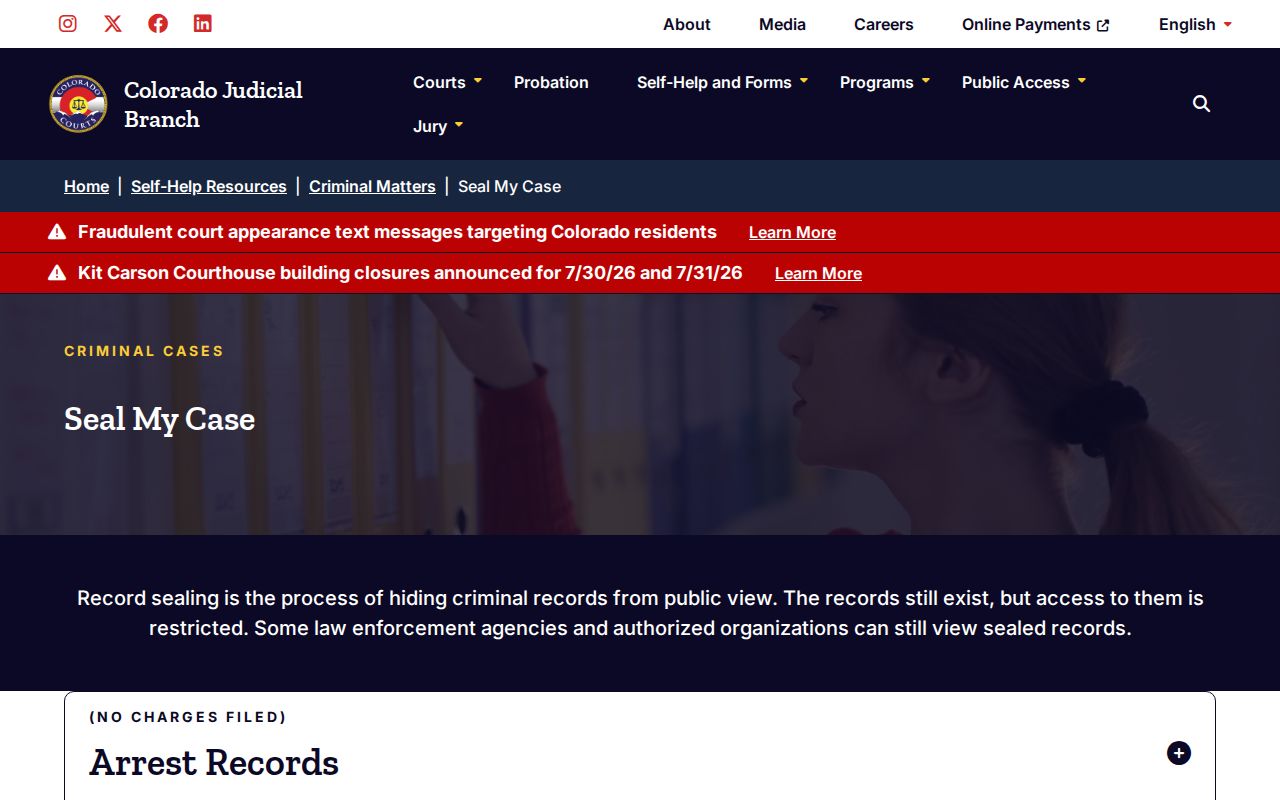
That self-help source is the better starting point than a generic internet search because eligibility depends on Colorado law and the specific Teller County case outcome.
Public Access to Criminal Court Records
Colorado court-record access is governed by Colorado Judicial Branch policy, including CJD 05-01, and by statutes that treat court records, county records, and criminal justice records differently. CORA, C.R.S. 24-72-201 et seq., applies to many government records, but court case files are requested through Judicial Branch channels. Criminal justice records are governed separately under C.R.S. 24-72-301 to 24-72-309. Custodians may redact or withhold records involving juveniles, sealed cases, protected addresses, medical information, Social Security numbers, financial account numbers, ongoing investigations, and other confidential material.
Key Statutes and Policies:
CJD 05-01, Public Access to Court Records - Colorado Judicial Branch policy controls access to state court records and restricted categories.
C.R.S. 24-72-301 to 24-72-309 - Colorado criminal justice records are handled under a separate statutory scheme from general CORA records.
C.R.S. 13-3-117 - Colorado operates a defendant-only search for certain automatic conviction sealing confirmations.
Background Check Considerations
A Teller County criminal court lookup can be useful for reviewing a court file, but it is not the same as a regulated employment, tenant, credit, insurance, or licensing background report. Public court records may be incomplete, delayed, sealed, corrected, or limited to docket events. Criminal justice records outside the court file may be held by the sheriff, police, jail, DA, CBI, DOC, or federal agencies. Always verify with the official custodian before relying on a criminal record for an important decision.
Important: This website is not a consumer reporting agency and cannot be used for FCRA-regulated screening decisions.
The Colorado Springs Public Defender office page identifies the office serving Teller County defendants who qualify for appointed representation.
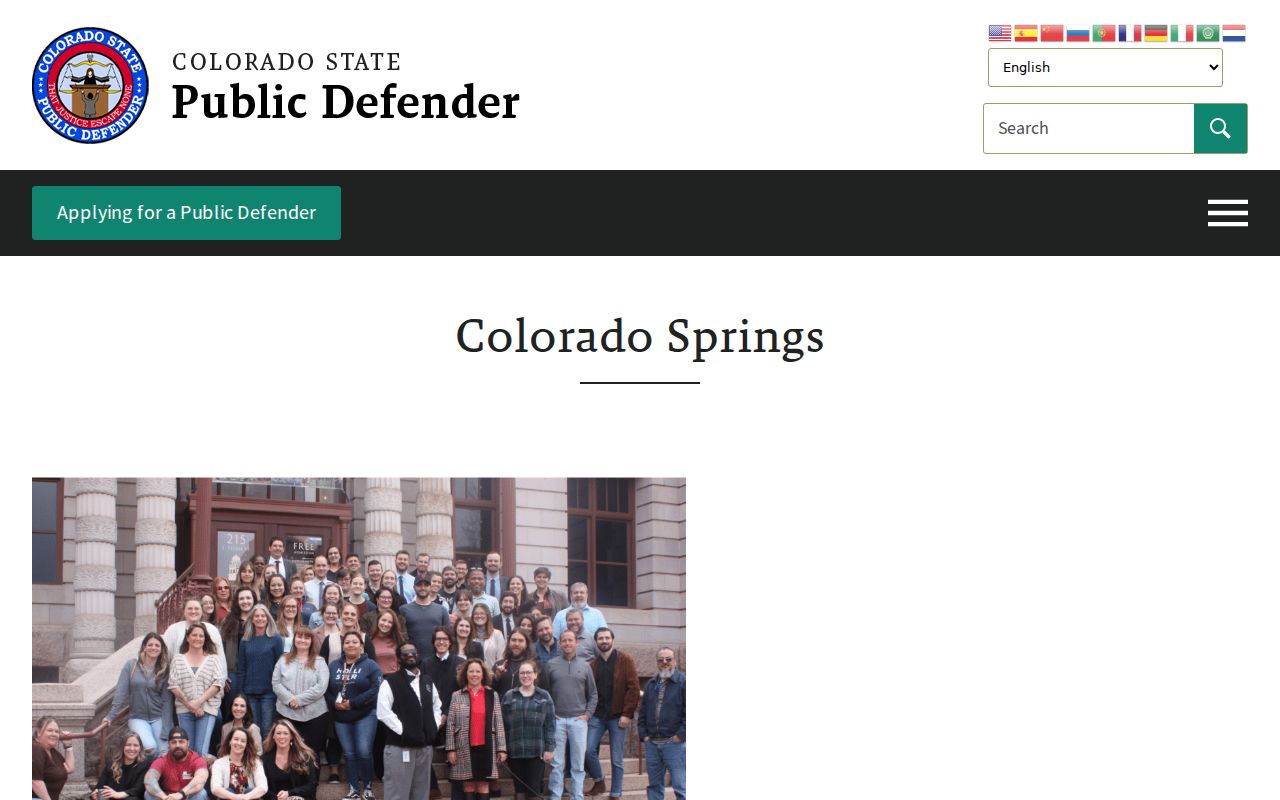
Representation status may appear in a criminal docket, but eligibility and case strategy questions belong with counsel, not the public docket search.
Restricted Criminal Court Records in Teller County
Juvenile delinquency and dependency records are not ordinary public adult criminal records. The Colorado Judicial Branch Access Guide notes that juvenile-record availability is primarily governed by the Children's Code and CJD 05-01. Adoption and mental health proceedings are also restricted. Search warrants can be sealed during an investigation. Personal identifiers, minor names, protected addresses, medical details, and financial account numbers may be redacted. If a search result is missing, it may be because the case is sealed, confidential, not yet indexed, in another court, municipal rather than state, or held by a non-court custodian.