
Teller County Arrest Records and Court Charges
Arrest records and court charge records are related, but they are not the same record. The Teller County Sheriff's Office operates from 11400 US Highway 24 in Divide and maintains the Detentions Facility and active jail roster. A booking or roster entry may show name, gender, age, booking number, booking date, primary offense, arresting agency, charge information, bond amount, fine amount, and possible release date. That jail data is custody information. It can reflect why a person was booked, but it is not the final court accusation and it is not a conviction.
The court charge record begins when the 4th Judicial District Attorney or another authorized prosecuting authority files charges in court. Teller County state criminal cases are handled through Teller County Combined Court in Cripple Creek, with felonies generally in District Court and misdemeanors or initial felony complaints often in County Court. Municipal charges may belong to Woodland Park Municipal Court or Cripple Creek Municipal Court. The court charge record may show the filed offense, statute, case number, hearing settings, amendments, dismissals, plea, disposition, bond orders, and sentence. The full case file is broader than the charge list because it includes motions, orders, hearings, and final judgment.
For custody and booking information, use the Teller County Detention Center active roster and the jail phone line. For official filed charges, use the Colorado Judicial Branch docket search, Teller Clerk of Court, and record/document request form. For prosecutor contacts, the 4th Judicial District Attorney serves both El Paso and Teller counties, with a Teller County office in Cripple Creek. For defense representation, the Colorado State Public Defender Colorado Springs office serves Teller County defendants who qualify.
The Colorado State Public Defender site identifies the statewide defense agency that can represent eligible Teller County defendants.
That defense channel is separate from the public charge record, but it is often part of the court docket once counsel enters an appearance.
How to Find Teller County Arrest Records and Charges
Start with the correct custodian. If the question is whether someone is currently in the Teller County Jail, use the sheriff-linked roster or call the jail at 719-687-7770 with biographical information such as first name, last name, hyphenated names, aliases, date of birth, and country of birth. If the question is what formal charges were filed, use the Colorado Judicial Branch docket search with Teller County, 4th Judicial District, and the relevant case information. If the charge does not appear online, contact the Teller Clerk of Court at 719-689-7360 or use the Judicial Branch record/document request form.
- Check the Teller County Detention Center active roster for current booking, primary offense, arresting agency, and bond fields.
- Use the Colorado Judicial Branch docket search and select Teller County or 4th Judicial District for court-filed charges.
- Search by defendant name, case number components, attorney name, or court type when the charge has become a court case.
- Read each count separately because one arrest can produce several charges with different statuses.
- Request documents from the Clerk of Court if the docket does not show the charging document, disposition, or certified copy needed.
State custody systems may matter after a Teller case is sentenced or transferred. The Colorado Department of Corrections inmate locator covers sentenced state prisoners. The Colorado state locate-inmate service points users to that DOC database. Federal custody is separate and uses the Federal Bureau of Prisons inmate locator. Sex offender registration information is handled through the Colorado Bureau of Investigation public registry resources, not through the local court charge page alone.
The Colorado DOC inmate locator is a state-prison search, not a Teller County jail roster.
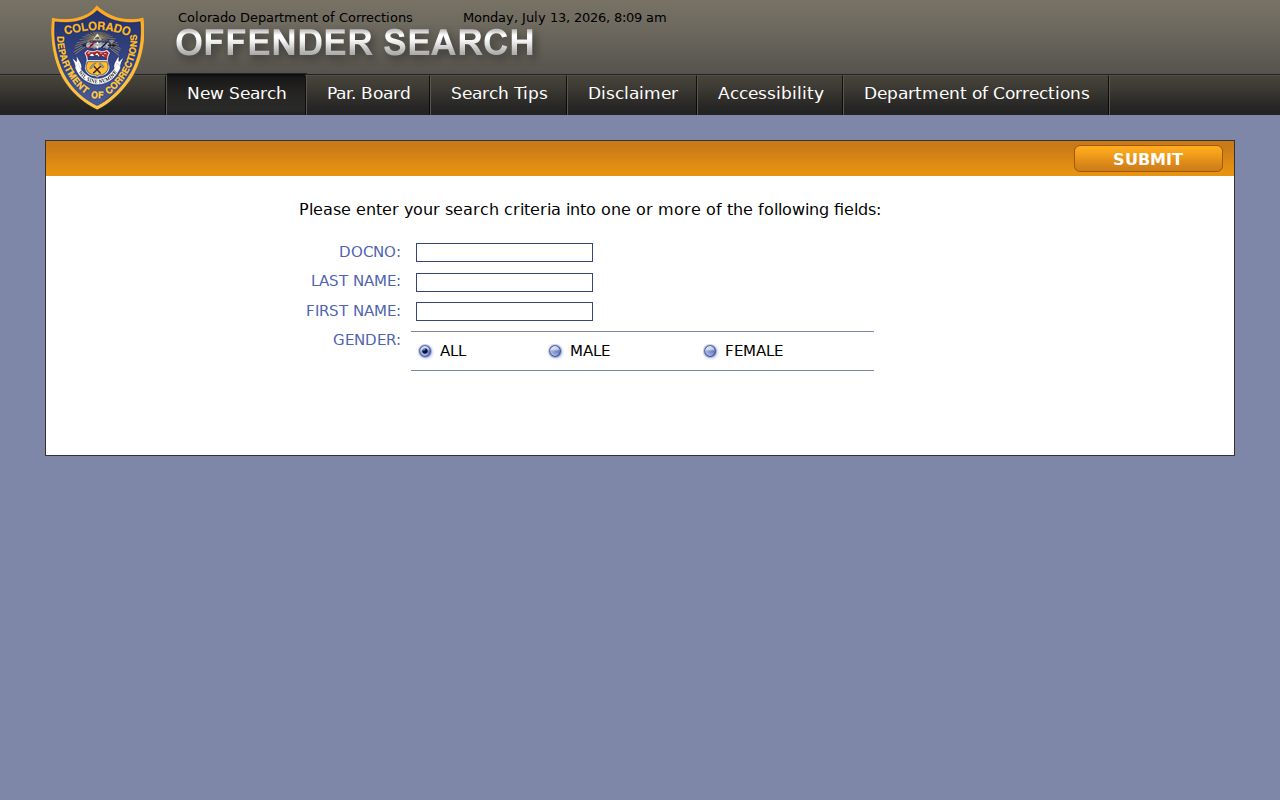
Use DOC only when the person has moved into state custody or when the local jail roster no longer answers the custody question.
How Charges Get Filed After an Arrest: Complaint, Information, and Indictment
A booking charge can change once the prosecutor reviews reports, evidence, witness statements, body-camera material, lab results, or victim information. The DA may file the same offense, file fewer charges, add counts, reduce the severity, decline prosecution, or file in a different court level. Colorado court records can include a complaint, information, indictment, or amended charging document. The exact title depends on the case type and prosecution path. A charge record should always be read as an allegation until a court disposition shows a conviction or other final result.
| Complaint | Information | Indictment | |
|---|---|---|---|
| Filed By | Prosecutor or authorized charging authority in court. | Prosecutor, often after review or felony filing decision. | Grand jury accusation in serious or selected matters. |
| Common For | Misdemeanors, felony complaints, traffic or local criminal filings. | Felony charges and amended prosecution filings. | Cases presented to a grand jury. |
| Record Effect | Starts or defines the court accusation. | Sets the filed counts and statutory basis. | Creates formal charges after grand jury action. |
| Search Path | Docket search, Clerk of Court, or record/document request. | Docket search and clerk document request. | Court record access if public and not sealed. |
Charge Status and What It Means
Charge status can change throughout a Teller County case. A charge may be pending while hearings are set, amended if the DA changes the count, reduced as part of a plea, dismissed because the court or prosecutor removes it, or resolved by conviction, acquittal, deferred judgment, or other disposition. Dockets can be brief, so a certified document request may be necessary when the exact legal effect matters.
| Status | What It Means |
|---|---|
| Pending | The filed charge has not reached final disposition. Hearings, bond, motions, or plea discussions may still be active. |
| Amended / Reduced | The prosecutor or court changed the original count, statute, severity, or description. Compare original and amended documents. |
| Dismissed | The charge was removed or ended without a conviction on that count, though other counts may remain. |
| Deferred | The defendant may have agreed to conditions. Final record treatment depends on compliance and court orders. |
| Convicted | The court accepted a guilty plea or entered a guilty finding and sentencing can follow. |
The Colorado state locate-inmate service routes custody users to the DOC search when a person is no longer a county jail detainee.
That distinction helps prevent confusing a local arrest record with a post-sentence state custody record.
Charges vs. Convictions
Being charged is not being convicted. A charge is an allegation filed in court after arrest, summons, or direct filing. A conviction is a final guilty outcome by plea or verdict. Public records may contain both, and users must read the disposition field before treating a record as final. A charge can be dismissed, reduced, amended, merged into another count, or sealed later under Colorado law.
| Charge | Conviction | |
|---|---|---|
| Stage | Accusation filed by the prosecutor or shown in early booking/court data. | Final guilty plea or guilty finding entered by the court. |
| Proof Level | Probable cause or filing decision. | Beyond reasonable doubt or knowing guilty plea. |
| Can Change | Yes, charges may be added, amended, reduced, or dismissed. | Can later be appealed, corrected, sealed, or affected by post-conviction orders. |
| Practical Use | Shows what was alleged, not what was proven. | Shows the final criminal finding for that count unless later changed. |
Sealed vs. Expunged Records
Colorado sealing hides eligible records from ordinary public access while preserving them for authorized access. The Colorado Judicial Branch sealed-case search is defendant-only and limited to certain automatic conviction sealing under C.R.S. 13-3-117. Petition-based sealing, non-conviction sealing, and juvenile expungement follow separate rules and forms. A sealed arrest or charge may still exist with law enforcement or the court even when public search tools no longer show it.
| Sealed | Expunged | |
|---|---|---|
| Visibility | Restricted from public view after qualifying process or order. | Unavailable to ordinary public search under specific expungement law. |
| Record Exists | Yes, generally still available to authorized users. | Depends on the statute and record category. |
| Common Colorado Use | Adult criminal cases, non-convictions, eligible convictions, and automatic categories. | Juvenile or special statutory categories. |
| Where To Start | Colorado Judicial Branch Seal My Case and the Teller court that handled the case. | Juvenile or statutory expungement forms and court instructions. |
Charge Codes and Severity Levels
A Teller County charge may cite a Colorado statute, municipal ordinance, case class, offense description, and severity level. Felonies generally move through District Court. Misdemeanors, traffic infractions, and felony complaints may appear in County Court. Municipal ordinance and municipal traffic or criminal violations may be handled by Woodland Park or Cripple Creek Municipal Court. One arrest can produce several charges, and each charge can have its own bond amount, fine amount, disposition, and sealing status. Do not assume that a primary offense on the jail roster equals every formal count filed in court.
Sex offender registration records use the Colorado Bureau of Investigation public registry search agreement, separate from the court charge docket.
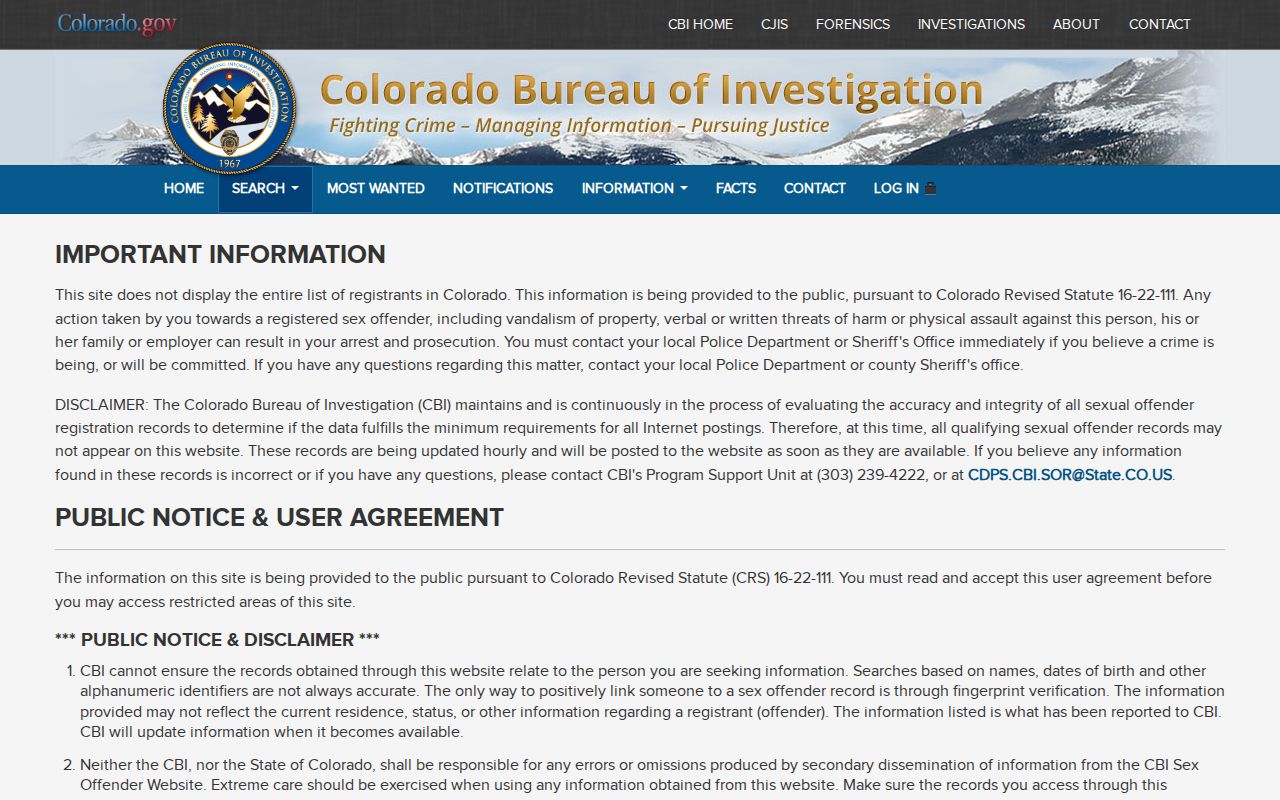
A registry result can be related to a criminal conviction, but it is not a substitute for reading the Teller court case record and sentencing order.
Statewide Charge and Criminal History Lookups
Statewide systems answer questions that a local charge docket may not. The Colorado Department of Corrections inmate locator covers sentenced state prisoners. The Federal Bureau of Prisons locator covers federal custody from 1982 to present. The Colorado Bureau of Investigation provides sex offender registry access and registration resources. A statewide criminal history or registry source should be matched against the court file before drawing conclusions because it may not show dismissed counts, amended charges, sealed records, or the full Teller County case history.
The Colorado Bureau of Investigation Sex Offender Registration Unit page explains registry administration and related resources.
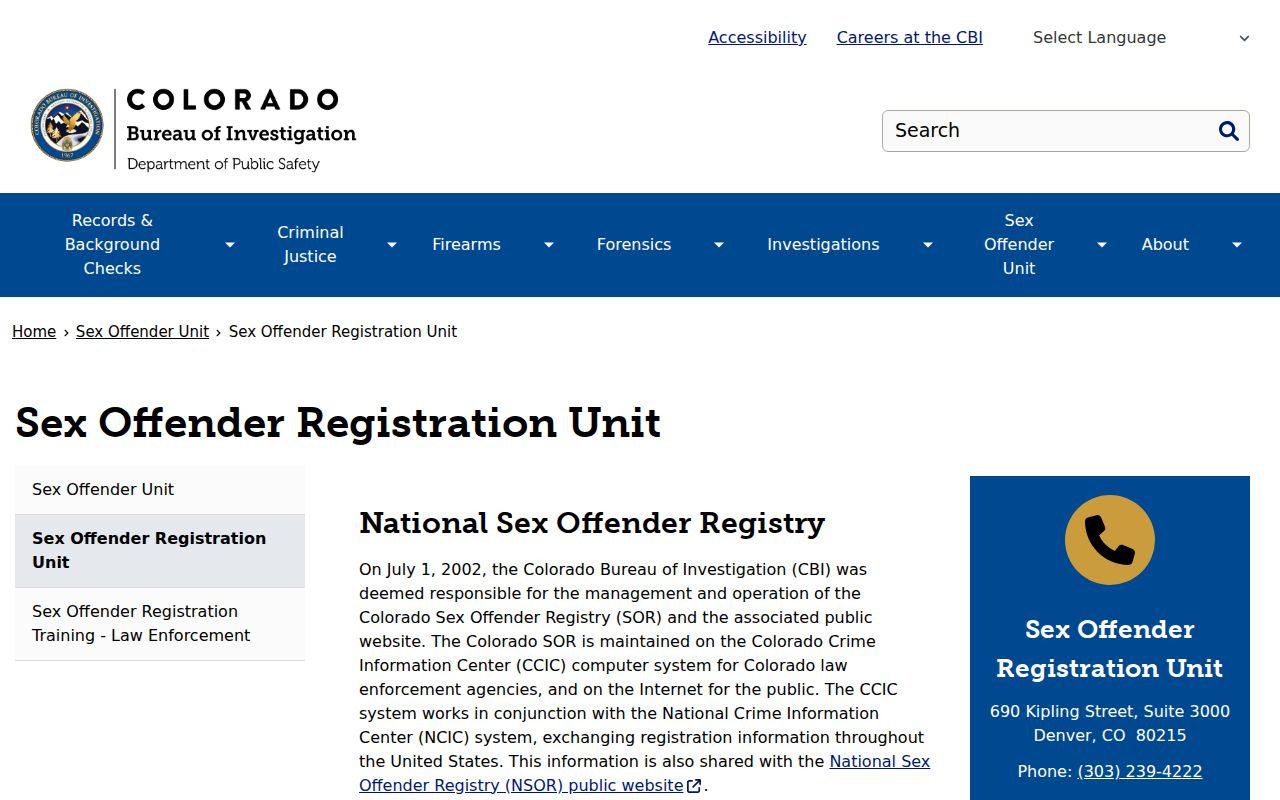
That registry context belongs with charge research only when the criminal case outcome created a registration obligation.
The Federal Bureau of Prisons mobile inmate search is useful only for federal custody, not local Teller County arrests.
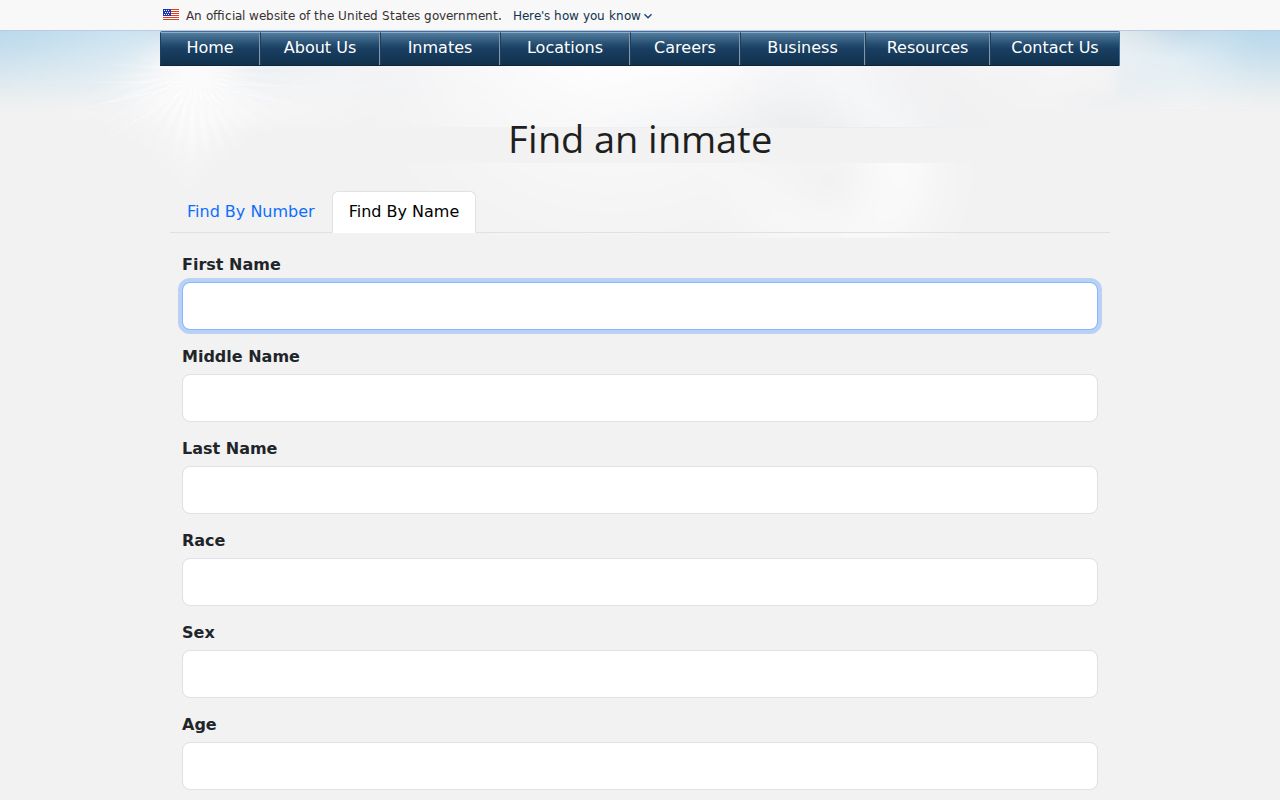
Federal custody records are outside Teller County's local court and jail systems, even when the person's home county or arrest history is local.
Background Check Considerations
Arrest records and court charges can be incomplete or misleading without the final disposition. A booking entry may show a charge before the prosecutor files anything. A court docket may show a filed charge before a plea or trial. A background report may show stale information if a case was dismissed, sealed, amended, or transferred. Employers, landlords, lenders, insurers, and other regulated users must follow the Fair Credit Reporting Act and any applicable Colorado law rather than relying on casual public-record searching.
Important: This website is not a consumer reporting agency and cannot be used for FCRA-regulated eligibility decisions.
Restricted Charge Records in Teller County
Some charge information is not public. Juvenile charges are restricted under Colorado juvenile law and CJD 05-01. Search warrants may be sealed during investigations. Personal identifiers, minor names, medical information, protected addresses, and financial data can be redacted. Sealed cases may be hidden from public docket access, and the sealed-case confirmation tool is limited to defendants and specific automatic sealing categories. If a charge cannot be found, check the court level, municipal venue, spelling, case number, date range, and whether the record belongs to the jail, DA, sheriff, DOC, BOP, CBI, or court clerk.